


Why knowing what you own and thinking long term can be powerful advantages for rental property investors.
By Luc Marceau | President, Rentals America
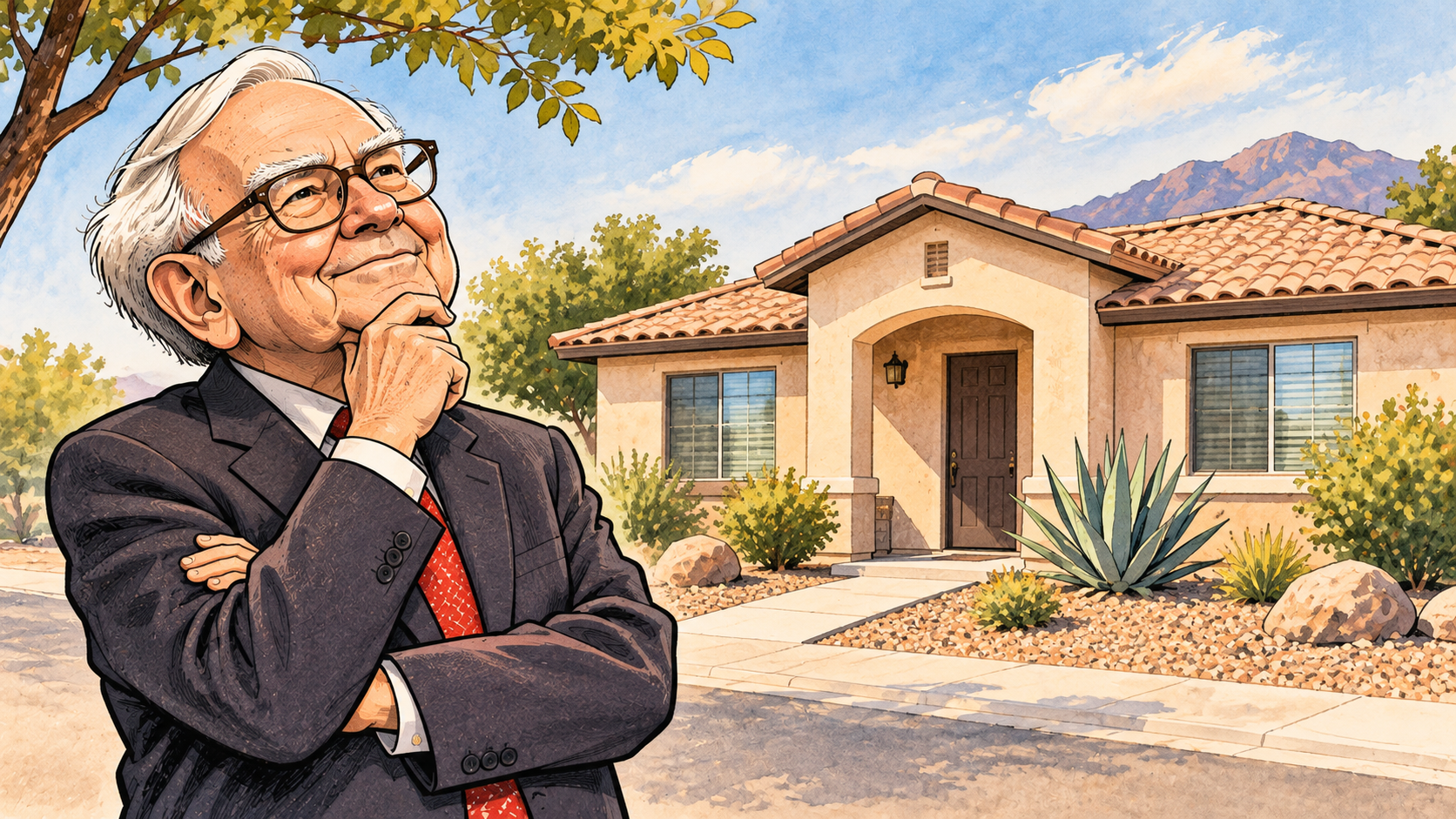
I've always appreciated Warren Buffett's approach to investing. Rather than constantly trying to predict where the market is headed or searching for the next opportunity, he focuses on owning good businesses, understanding them well, and holding them for the long term.
Buffett famously wrote:
“Our favorite holding period is forever.”
I think there's a valuable lesson in that philosophy for rental property owners.
Consider this question: If you didn't already own your rental property, would you buy it again today?
Maybe you purchased it years ago at a much lower price, with a mortgage rate that's difficult to find today. Perhaps rents have increased, you've paid down the loan, and you've made improvements along the way.
At today's prices and interest rates, the numbers might not make sense for a new buyer. But that doesn't necessarily mean the property isn't an excellent investment to continue owning.
In fact, I think there are some often-overlooked advantages to owning a good rental property for a long time.
You Don’t Have to Time the Market
One of the things I appreciate about long-term investing is that you don't have to constantly predict what the market will do next.
Real estate moves through cycles. There are periods of strong appreciation and rising rents, followed by slower markets when values flatten, rent growth moderates, or vacancies become more challenging.
Each cycle brings different challenges, but also opportunities. During a strong rental market, owners may benefit from rising rents and property values. During a slowdown, rent increases may be harder to achieve, but lower interest rates—if they occur—could create refinancing opportunities when the numbers and financing terms make sense.
And when interest rates rise, owners with attractive fixed-rate mortgages may benefit from keeping their existing financing.
Over a long holding period, you're likely to experience several different market environments. You don't have to get every cycle right to benefit from owning a good property.
Trying to time the market requires making multiple decisions correctly. When do you sell? When do you buy again? What happens if the replacement investment doesn't perform as expected?
I'd rather focus on owning quality investments that can weather different market conditions than constantly trying to predict what comes next.
For more on the fundamentals of evaluating rental investments, see our Real Estate Investor’s Guide.
There’s Value in Knowing What You Own
Another advantage of long-term ownership is something that doesn't always show up on a financial statement: familiarity.
Over time, you understand a property’s maintenance history, recurring expenses, potential trouble spots, and improvements that may be needed. You learn what tenants value and what it takes to keep the home competitive.
That knowledge can help you make better decisions. When you sell and purchase another property, you start much of that learning process over again, with new uncertainties and expenses.
Familiarity doesn't guarantee strong returns, but there's real value in understanding an asset inside and out.
How I Approach My Own Rental Properties
I try to apply this same philosophy to my own rental properties.
One example is a patio home I've owned for years. There's nothing particularly special about it. It's a relatively simple property, but it's been an excellent rental investment. The current tenant has lived there for 11 years.
We raise the rent each year, but it's still a little below market. I'm comfortable with that. We're keeping pace with rental increases, but I'm not necessarily trying to capture every last dollar.
Having a reliable, long-term tenant has value, too. Turnover can be expensive, and sometimes stability is worth more than squeezing out a little additional rent. Finding that balance is part of pricing a rental property.
Over the years, I've also made improvements as opportunities presented themselves.
For example, the property's air conditioner was getting older but was still working. Normally, I wouldn't replace a functioning system without a good reason. But I had an opportunity to purchase a new, more efficient unit at a substantial discount during the off-season.
Because I expect to own the property for many years, I was happy to make the upgrade. I could take advantage of the pricing, improve the property, and provide something I knew my tenant would appreciate.
There are other improvements I'd like to make eventually. The cabinets are getting older, and I've thought about converting the carport into a garage.
But there’s no urgency to do everything at once. I can make those improvements when the timing and economics make sense. It’s the same perspective that guides a thoughtful rental property maintenance strategy.
That's one of the things I appreciate about long-term ownership. I don't have to maximize every dollar of rent or rush every improvement.
It's not a remarkable property, and there hasn't been any particularly sophisticated investment strategy behind it. Just a good rental, a reliable tenant, and years of making sensible decisions. Sometimes that's enough.
The Cost of Starting Over
There's another consideration that often gets overlooked when evaluating whether to keep an investment: the cost of replacing it.
Selling involves transaction expenses, potential capital gains and depreciation-related taxes, and the question of what to do with the proceeds. If you want to remain invested in real estate, you then have to find, evaluate, and finance another property.
A properly structured 1031 exchange may defer certain taxes, but it comes with rules and limitations. And a replacement property needs to be attractive enough to justify the costs, risks, and effort involved.
None of this means selling is necessarily a bad decision. Sometimes it makes perfect sense. But when I already own a good property that's performing well, I don't feel compelled to find something new simply because the market has changed.
I’m a Portfolio Builder, Not a Portfolio Trader
That brings me back to the original question: Would you buy your rental property again today?
Maybe the answer is no. At today's price, with today's financing costs, it might not be the investment you'd choose if you were starting from scratch. But that doesn't necessarily mean you should sell it.
Long-term ownership isn’t about holding a property regardless of its performance. Rents need to be reviewed, expenses monitored, maintenance addressed, and the investment evaluated periodically. Future prospects and your financial goals matter more than what you originally paid. Sometimes selling is the right decision.
But when you own a good property with sound financial fundamentals, there's a lot to be said for continuing to improve it and allowing time to work in your favor.
I've never been particularly interested in constantly buying and selling properties just because the market changes. I prefer to find good investments, understand them, improve them over time, and let the benefits of ownership accumulate.
I'm a portfolio builder, not a portfolio trader.
And while every property and investor is different, I believe patience, thoughtful management, and a long-term perspective can be some of the greatest advantages a rental property owner has.
Sometimes the best investment opportunity isn't something new. It's the good investment you already own.
.jpg)